

RFID Tags
Find the ideal passive RFID tag for your industrial application. Engineered for OEMs and system integrators, our transponders across LF, HF, and UHF frequencies resolve complex integration challenges in demanding environments, reducing R&D cycles and accelerating time-to-market.
-
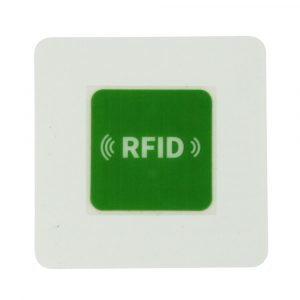
28x28mm Square RFID NFC Smart Tag
Price range: £0.75 through £0.90 Select options This product has multiple variants. The options may be chosen on the product page -
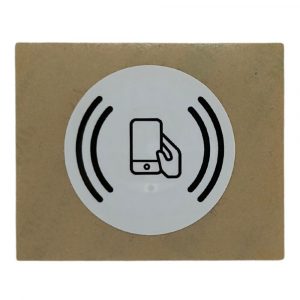
35mm Round RFID NFC Smart Tag
Price range: £0.75 through £0.90 Select options This product has multiple variants. The options may be chosen on the product page


-
15x30mm RFID NFC Smart Tag
£1.95Read moreThese 15x30mm RFID NFC Smart Tags and Labels are available with a Mifare 1k transponder. Manufactured as a self adhesive label, these tags are perfect for a wide variety of NFC / HF RFID applications.
These HF (13.56MHz) tags are tuned tightly to deliver the best performance with our HF Readers:
https://eccel.co.uk/product-category/rfid-readers-modules/current/current-hf-13-56-mhz/
This label complies with ISO/IEC 14443 Type A standard.
Please contact sales@eccel.co.uk for more information or a bespoke quote.
-
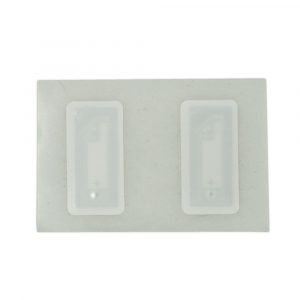
28x28mm Square RFID NFC Smart Tag
Price range: £0.75 through £0.90Select options This product has multiple variants. The options may be chosen on the product pageThese Square RFID NFC Smart Tags and Labels are available with a variety of transponders, such as, but not limited to, ICODE SLIX, Mifare 1k and NTag213. Manufactured as a self adhesive label, these tags are perfect for a wide variety of NFC / HF RFID applications.
These HF (13.56MHz) tags are tuned tightly to deliver the best performance with our HF Readers:
https://eccel.co.uk/product-category/rfid-readers-modules/current/current-hf-13-56-mhz/
These tags are available in a variety of colours and sizes – please contact sales@eccel.co.uk for more information or a bespoke quote.
-
35mm Round RFID NFC Smart Tag
Price range: £0.75 through £0.90Select options This product has multiple variants. The options may be chosen on the product pageThese round RFID NFC Smart Tags and Labels are available with a variety of transponders, such as, but not limited to, ICODE SLIX, Mifare 1k and NTag213. Manufactured as a self adhesive label, these tags are perfect for a wide variety of NFC / HF RFID applications.
These HF (13.56MHz) tags are tuned tightly to deliver the best performance with our HF Readers:
https://eccel.co.uk/product-category/rfid-readers-modules/current/current-hf-13-56-mhz/
These tags are available in a variety of colours and sizes – please contact sales@eccel.co.uk for more information or a bespoke quote.
-
Custom Smart RFID NFC Card
Read moreAs well as our wide range of off the shelf Smart RFID NFC Cards, RFID / NFC Labels and RFID / NFC Wristbands, we can also offer custom designs for your application. Whether that is custom printing on a standard RFID Smart card, or something completely bespoke, we can offer competitive pricing and fast time to market.
Contact our sales team at sales@eccel.co.uk for more information.
-
Dual Frequency RFID labels
£1.60Read moreThese dual frequency RFID labels have an EM4423 transponder. The chip is a dual frequency device supporting ISO14443A Type A, NFC Forum Type 2 specifications, ISO18000-63 and EPC Gen2 V2.
The EM4423 chip can be used in various applications, such as inventory management, asset tracking, access control, and NFC applications. Its dual frequency capability allows it to operate in both HF and UHF ranges, making it a versatile solution for a wide range of RFID applications.
Please contact sales@eccel.co.uk for more information or a bespoke quote.
-
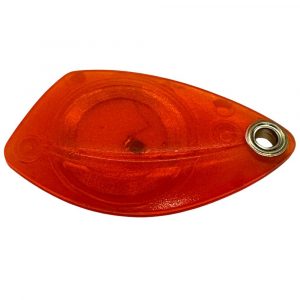
Plastic RFID Keyfob Tag
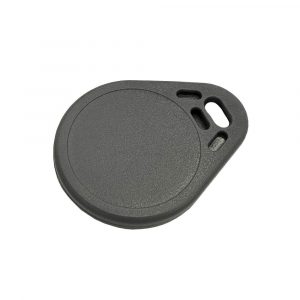
£0.75Read moreThis plastic RFID Keyfob Tag is available with LF transponder EM4102. Manufactured using ABS plastic, they are durable and perfect for a wide variety of LF RFID applications.
These LF (125kHz) keyfobs are tuned tightly to deliver the best performance with our LF Readers.
These keyfobs are available in a variety of colours and can be customised – please contact sales@eccel.co.uk for more information or a bespoke quote.
-
Plastic RFID NFC Keyfob Tag
£0.95Read moreThese RFID NFC Keyfobs / Tags are available with a variety of transponders, such as, but not limited to, ICODE SLIX, MIFARE Classic 1K and NTAG213. Manufactured using ABS plastic, they are durable and perfect for a wide variety of NFC / HF RFID applications.
These HF (13.56MHz) keyfobs are tuned tightly to deliver the best performance with our HF Readers:
https://eccel.co.uk/product-category/rfid-readers-modules/current/current-hf-13-56-mhz/
These keyfobs are available in a variety of designs and can be customised – please contact sales@eccel.co.uk for more information or a bespoke quote.
-
RFID NFC Wristband
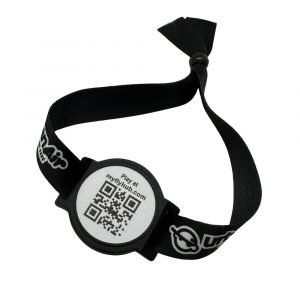
Read moreOur RFID NFC wristbands are manufactured with a high quality durable fabric strap and ABS plastic plate for extra strength. They also come with a locking bead for easy adjustment.
They are completely customisable – including printing on the strap, face and can include a QR code linked to the UID of the chip.
They are available with a wide range of transponders, including, but not limited to, ICODE SLIX, Mifare 1k and Ntag213.
Please contact sales@eccel.co.uk for more information or a bespoke quote.
-
Smart RFID Card – EM4102
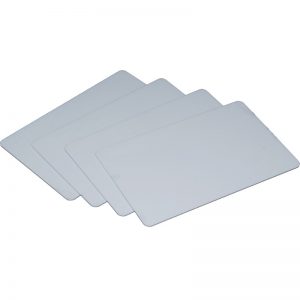
£0.75Read moreSmart RFID Card EM4102 (EM Microelectronics) transponder. This card is LF frequency (125 kHz).
Custom printing also available – please email sales@eccel.co.uk for a bespoke quote.
-
Smart RFID Card – HITAG S2048
£1.55Add to basketSmart RFID Card with HITAG S2048 transponder. This card is LF frequency (125kHz).
Custom printing also available – please email sales@eccel.co.uk for a bespoke quote.
-
Smart RFID Card – HITAG2
£1.50Read moreSmart RFID Card with HITAG2 transponder. This card is LF frequency (125kHz).
Custom printing also available – please email sales@eccel.co.uk for a bespoke quote.
-
Smart RFID NFC Card – ICODE SLI
£0.75Add to basketSmart RFID NFC Card with ICODE SLI transponder. This card is HF frequency (13.56MHz).
Custom printing is also available on these cards, please email sales@eccel.co.uk for further details.
-
Smart RFID NFC Card – MIFARE Classic
£0.80Add to basketSmart RFID NFC Card with MIFARE Classic transponder. This card is HF frequency (13.56MHz).
Custom printing is also available on these cards, please email sales@eccel.co.uk for further details.
-
Smart RFID NFC Card – MIFARE DESFire
£0.95Add to basketSmart RFID NFC Card MIFARE DESFire transponder. This card is HF frequency (13.56 MHz).
Custom printing is also available on these cards, please email sales@eccel.co.uk for further details.
-
Smart RFID NFC Card – NTAG2xx
£0.90Add to basketSmart RFID NFC Card with NTAG2xx transponder. This card is HF frequency (13.56 MHz).
Custom printing is also available on these cards, please email sales@eccel.co.uk for further details.
-
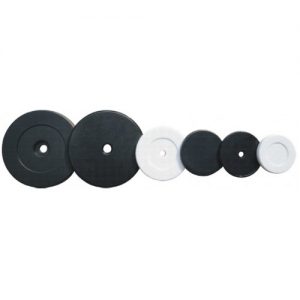
Black polycarbonate disc tag EM4102 30mm x 2.3mm – 3mm hole
£0.70Read moreABS Polycarbonate Black Disc Tag EM4102. A rugged black ABS/polycarbonate 30mm diameter by 2.3mm thick EM4102 transponder based disc tag. The tag has a 3mm diameter hole in the centre to allow easy fixing. These disc tags can be made with a 5mm centre hole or without a centre hole. These tags can also be supplied in different colours (minimum quantity of 3000 required). Contact us if you have different colour requirements. Lead time is 2-3 weeks from order.
Industrial RFID Tags and Transponders for OEM Integration
Developing embedded systems for industrial, medical, and automotive applications requires highly specialized hardware rather than consumer-grade components. These passive transponders are precisely engineered to integrate directly into complex host systems, establishing reliable data capture where standard off-the-shelf modules fail.
By deploying purpose-built components, engineering teams bypass the inherent limitations of standard tags that cannot meet strict operational tolerances. Eccel’s technical support directly reduces R&D costs and accelerates the product lifecycle. Implementing the appropriate RFID tag minimizes engineering hours spent on troubleshooting and redesigns, maximizing your return on investment.
Overcoming Environmental Interference with Custom RFID Tags
Electromagnetic interference degrades transponder performance by reflecting or absorbing radio frequency signals. In industrial settings, metal surfaces induce signal attenuation and eddy currents, while liquids absorb critical RF energy. Resolving these complexities relies on precise physical modifications, such as antenna tuning and specialized packaging, rather than alterations to the internal chip architecture.
Antenna Tuning and Ferrite Shielding for Metal Proximity
When a passive transponder is positioned near metallic surfaces, the metal disrupts the electromagnetic field required for operation. We offer custom hardware solutions, including the specialized NFC tag, equipped with ferrite-shielding and precise antenna tuning to compensate for this interference.
By engineering the physical properties of the tag to match its environment, we restore the resonant frequency and ensure stable communication. Our on-metal tag designs incorporate physical spacers and magnetic layers to prevent the metal from shorting the antenna, ensuring reliable read ranges even within highly reflective environments.
Adapting Packaging for Industrial Stress
Industrial applications expose hardware to extreme temperatures, chemicals, and mechanical vibration. We adapt the physical packaging of the transponder, using materials like PPS, Ceramic, or epoxy encapsulation, to protect the internal chip and antenna. This physical shielding provides a dependable defense for OEM integrations, directly lowering field failures and long-term replacement costs.
Maintaining Strict Manufacturing Tolerances for High Yield
Precision in the manufacturing process is critical for maintaining consistent RF performance across large production volumes. At our automated facility in Poland, we enforce strict tolerances to ensure:
- Resonant Frequency Stability: Tight control over antenna geometry prevents frequency drift, ensuring every tag in a batch performs identically.
- Predictable Engineering Workflow: Eliminating signal variations prevents integration inconsistencies on the assembly line.
- Optimized Assembly Yield: Consistent electrical characteristics translate to fewer failed units during final QC and a more predictable production timeline.
Supported Frequencies and Interfaces
To ensure seamless data transmission across modern industrial networks, our embedded solutions support the full range of passive frequencies and industrial hardware interfaces:
- LF, HF, and UHF Frequency Bands:
- LF (125-134 kHz): Superior tolerance near metal and liquids; ideal for short-range industrial tools.
- HF (13.56 MHz): The standard for high-speed data transfer, nfc cards, and secure medical applications..
- UHF (860-960 MHz): Enables long-range passive tracking (up to 10+ meters) for logistics and automation.
- Industrial Connectivity: Full compatibility with our reader modules supporting RS485, I2C, SPI, and USB interfaces.
- Advanced Data Security: Support for passive transponders with AES-128 encryption (such as DESFire EV2/3), securing the data payload between the tag and the host system.
Accelerating Approvals with Pre-Certified Reader Modules
While passive tags follow ISO standards, the integration with a reader is where regulatory hurdles typically occur. By pairing your tags with Eccel’s NFC reader modules, which carry Full Modular Approval (FCC, CE, ISED, UKCA), you significantly reduce project risks. Using pre-certified modules allows manufacturers to frequently bypass expensive intentional radiator testing for the final host system, streamlining the commercial path to market.
Buy RFID Tags with Long-Term Supply Chain Stability
Technical buyers need confidence that an RFID tag buy will not lead to production halts caused by component obsolescence. Eccel operates a fully automated in-house manufacturing facility in Poland, ensuring strict control over the supply chain and guaranteeing long-term availability. Our capability to provide consistent, high-quality passive transponders safeguards your production line against unexpected disruptions.

