
RFID Tags
-
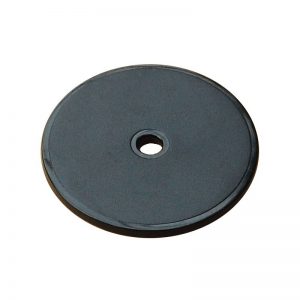
ABS Polycarbonate Black Disc Tag HITAG S256
£2.00Add to basketABS Polycarbonate Black Disc Tag Hitag S256. A rugged black ABS/polycarbonate 30 mm diameter by 2.3 mm thick HITAG S256, 125KHz transponder based disc tag. The tag has a 3mm diameter hole in the centre to allow easy fixing. These tags can also be supplied in different colours (minimum quantity of 3000). These disc tags can be made with a 5mm center hole or without a center hole. Contact us if you have different colour or mount on metal requirements. Lead time is 2-3 weeks from order.
-
ABS Polycarbonate Black Disc Tag HITAG S256 MoM
£2.30Read moreABS Polycarbonate Black Disc Tag Hitag S256. A rugged black ABS/polycarbonate 30 mm diameter by 2.6mm thick HITAG S256, 125KHz transponder based disc tag. IP67 rated. The non self-adhesive tag has a 3mm diameter hole in the centre to allow easy fixing. These tags can also be supplied in different colours (minimum quantity of 3000). Lead time is 2-3 weeks from order.
If you wish to order 25 or more of this product, please email us at sales@eccel.co.uk for a discount quotation.
-
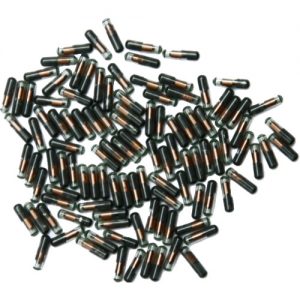
Injectable Transponder Animal Tags EM4102. 12mm x 2mm 125KHz
£2.95Add to basketEM4102 injectable glass tag 12mm long and 2mm diameter. For use with our EM4102 dataloggers in conjunction with loop antennas up to 80mm diameter.
The country of origin for this product is China. If these are being shipped into the United States, please note there may be US federal government tariffs applicable.
The HS code for this product is 8534.00.9000.
-
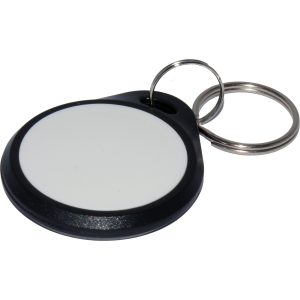
Two Colour Small Keyfob UHF ALIEN Higgs 3 EPC (Black & White)
£1.10Add to basketA 2-colour (standard stock is black body with white insert face) -UHF-ISO-18000-6C-ALIEN Higgs-3-EPC-GEN2 , 868MHz based IP65 rated Keyfob. Dimensions are 34mm x 30mm x 5.1mm. Custom printing of the face is available upon request (minimum order quantity for custom printing/programming is 100 pieces), as is serial number printing on the face and/or custom programming of the transponder memory. Please contact us for details on these non standard requirements of product colours and custom printing and/or programming. Lead time is 2-3 weeks to order
-
Two Colour Small Keyfob EM4102 (Black & White)
£1.10Add to basketA 2-colour (standard stock is black body with white insert face) EM4102, 125KHz based IP65 rated Keyfob. Dimensions are 34mm x 30mm x 5.1mm. Custom printing of the face is available upon request, as is serial number printing on the face. Please contact us for details on these non standard requirements of product colours and custom printing. Lead time is 2-3 weeks to order.

