


RFID Labels and Stickers
Precision is the core of successful passive integration. Eccel offers a specialized selection of embedded rfid labels and transponders designed to streamline OEM workflows. These engineered devices provide reliable identification and secure data transfer for complex biomedical and industrial automation systems.
-
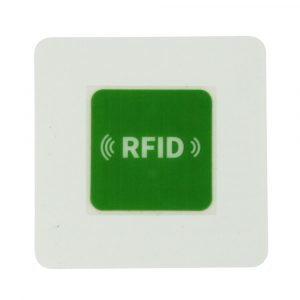
28x28mm Square RFID NFC Smart Tag
Price range: £0.75 through £0.90 Select options This product has multiple variants. The options may be chosen on the product page -
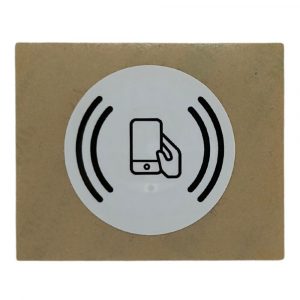
35mm Round RFID NFC Smart Tag
Price range: £0.75 through £0.90 Select options This product has multiple variants. The options may be chosen on the product page

-
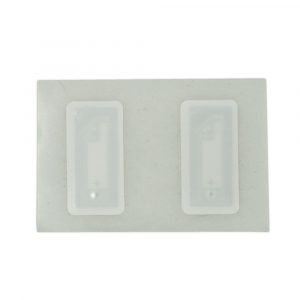
15x30mm RFID NFC Smart Tag
£1.95Read moreThese 15x30mm RFID NFC Smart Tags and Labels are available with a Mifare 1k transponder. Manufactured as a self adhesive label, these tags are perfect for a wide variety of NFC / HF RFID applications.
These HF (13.56MHz) tags are tuned tightly to deliver the best performance with our HF Readers:
https://eccel.co.uk/product-category/rfid-readers-modules/current/current-hf-13-56-mhz/
This label complies with ISO/IEC 14443 Type A standard.
Please contact sales@eccel.co.uk for more information or a bespoke quote.
-
28x28mm Square RFID NFC Smart Tag
Price range: £0.75 through £0.90Select options This product has multiple variants. The options may be chosen on the product pageThese Square RFID NFC Smart Tags and Labels are available with a variety of transponders, such as, but not limited to, ICODE SLIX, Mifare 1k and NTag213. Manufactured as a self adhesive label, these tags are perfect for a wide variety of NFC / HF RFID applications.
These HF (13.56MHz) tags are tuned tightly to deliver the best performance with our HF Readers:
https://eccel.co.uk/product-category/rfid-readers-modules/current/current-hf-13-56-mhz/
These tags are available in a variety of colours and sizes – please contact sales@eccel.co.uk for more information or a bespoke quote.
-
35mm Round RFID NFC Smart Tag
Price range: £0.75 through £0.90Select options This product has multiple variants. The options may be chosen on the product pageThese round RFID NFC Smart Tags and Labels are available with a variety of transponders, such as, but not limited to, ICODE SLIX, Mifare 1k and NTag213. Manufactured as a self adhesive label, these tags are perfect for a wide variety of NFC / HF RFID applications.
These HF (13.56MHz) tags are tuned tightly to deliver the best performance with our HF Readers:
https://eccel.co.uk/product-category/rfid-readers-modules/current/current-hf-13-56-mhz/
These tags are available in a variety of colours and sizes – please contact sales@eccel.co.uk for more information or a bespoke quote.
-
Dual Frequency RFID labels
£1.60Read moreThese dual frequency RFID labels have an EM4423 transponder. The chip is a dual frequency device supporting ISO14443A Type A, NFC Forum Type 2 specifications, ISO18000-63 and EPC Gen2 V2.
The EM4423 chip can be used in various applications, such as inventory management, asset tracking, access control, and NFC applications. Its dual frequency capability allows it to operate in both HF and UHF ranges, making it a versatile solution for a wide range of RFID applications.
Please contact sales@eccel.co.uk for more information or a bespoke quote.
RFID Labels and Stickers for OEM Integration
Navigating the custom rfid labels market requires a deep understanding of the operational environment. When integrating passive transponders, engineers must determine whether flexible rfid labels or ruggedized rfid stickers are best suited to the application's physical constraints. Flexible labels utilize thin substrates like PET or paper for conformal attachment to curved surfaces, making them ideal for laboratory sample tracking. In contrast, durable rfid stickers often feature thicker encapsulation to ensure survivability on metallic surfaces or in high-stress manufacturing zones.
The choice of substrate directly influences the dielectric properties of the tag, which dictates the necessary antenna tuning. By matching the physical format to the specific environment, such as medical equipment tracking or automotive part management, OEM developers can mitigate early-stage signal failures. This proactive engineering approach reduces R&D costs and secures a faster return on investment.
Engineering Performance: Material Science and Signal Integrity
Deploying expertly engineered passive devices prevents the standard failures often seen with consumer-grade adhesives and inlays. Using rfid labels with strict manufacturing tolerances ensures that every batch performs according to the approved engineering specifications, safeguarding your project’s ROI.
- Manufacturing Precision: High-precision fabrication controls the physical dimensions of the antenna, maintaining the intended resonant frequency across thousands of units.
- Industrial Communication: Full compatibility with our reader modules supporting RS485 and I2C, ensuring high noise immunity on the factory floor.
- Cryptographic Security: Support for AES-128 encryption prevents unauthorized data access and device cloning.
- Environmental Shielding: Advanced face stocks protect the transponder from thermal stress, moisture, and chemical exposure.
- Interference Mitigation: Specialized tuning and spacers neutralize the detuning effects of metal-heavy environments.
Passive Transponder Frequency Options
Selecting the right frequency is a fundamental requirement for reliable data transmission. The choice between LF, HF, or UHF dictates how the label interacts with its surroundings and what read ranges can be achieved.
LF (Low Frequency) Labels
Operating between 125 and 134 kHz, LF labels are the preferred choice for applications requiring high resistance to liquids and non-metallic interference. The antenna tuning for these tags focuses on matching the inductor-capacitor circuit to ensure stable performance even in moisture-rich environments, such as biomedical fluid tracking.
HF (High Frequency) Labels & NFC
HF transponders operate at 13.56 MHz and are the standard for secure proximity transactions. These labels require precise impedance matching to maintain signal integrity. While more sensitive to metal than LF, we use specialized RFID antennas and ferrite-shielding to ensure they remain functional near interference. This technology is also the foundation for our NFC cards.
UHF (Ultra High Frequency) Labels
UHF labels (860–960 MHz) provide significantly longer read ranges, from 3 to over 15 meters, and excel in bulk-reading scenarios. Because UHF signals are easily reflected by metal and absorbed by liquids, we apply specific physical modifications to the antenna geometry to optimize these labels for industrial supply chains.
The Lifecycle of a Custom RFID Label
Transitioning from a prototype to a deployed industrial solution requires a structured engineering roadmap. Our process ensures that your custom rfid labels are production-ready and fully compliant.
- Technical Analysis: Evaluating environmental constraints and selecting the optimal frequency and communication protocol (e.g., I2C or RS485).
- Antenna Tuning: Executing precise tuning based on the mounting surface's dielectric properties to maximize signal propagation.
- Packaging Design: Selecting substrates and adhesives that withstand thermal and mechanical stress.
- Regulatory Validation: Utilizing reader modules with Full Modular Approval (FCC/CE/UKCA) to bypass expensive RF testing for your host system.
