


NFC Key Fobs
Find a comprehensive range of passive NFC fobs engineered specifically for seamless integration into demanding OEM and industrial environments. Designed to support reliable identification, access control, and precise data transfer, these devices deliver consistent performance across rigorous operational requirements. By selecting the appropriate transponder, your engineering team can overcome hardware limitations and establish secure communication within complex host systems.
-
Plastic RFID NFC Keyfob Tag
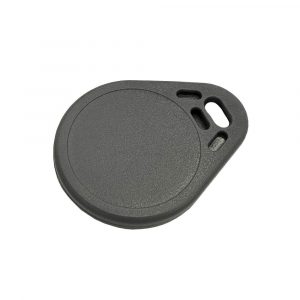
£0.95Read moreThese RFID NFC Keyfobs / Tags are available with a variety of transponders, such as, but not limited to, ICODE SLIX, MIFARE Classic 1K and NTAG213. Manufactured using ABS plastic, they are durable and perfect for a wide variety of NFC / HF RFID applications.
These HF (13.56MHz) keyfobs are tuned tightly to deliver the best performance with our HF Readers:
https://eccel.co.uk/product-category/rfid-readers-modules/current/current-hf-13-56-mhz/
These keyfobs are available in a variety of designs and can be customised – please contact sales@eccel.co.uk for more information or a bespoke quote.
Industrial Applications for Passive NFC Fobs
Implementing passive transponders within manufacturing facilities often reveals physical challenges that standard readers fail to navigate. Instead of attempting to alter internal chip architecture, we focus on the fundamental physics of radio frequency operation. This approach allows engineers to deploy tags that maintain reliable communication even when surrounded by metallic surfaces and heavy electrical noise, ensuring consistent system performance and a faster path to profitability.
Overcoming Interference and Signal Loss
High-powered machinery and electrical cables generate intense interference that can degrade an NFC key fob's performance by masking its signal. Metallic surfaces compound this difficulty by disrupting the electromagnetic energy and shifting the device's resonance frequency, often resulting in missed reads. Our specialized RFID antennas are designed to help mitigate these effects.
To resolve these issues, we rely on custom antenna tuning and high-permeability ferrite shielding to redirect signals away from metal surfaces. By adjusting the antenna's impedance and applying strict manufacturing tolerances, we ensure maximum power transfer. This minimizes signal reflection and restores the transponder's resonance to the critical 13.56 MHz frequency, preventing costly project delays.
Host System Integration and Packaging
Effective data transfer requires establishing robust connections between the reader and the main industrial host system. For long-distance configurations connecting multiple readers to PLCs, utilizing standard interfaces like RS485 provides signal stability. In deeply embedded architectures, protocols such as I2C guarantee precise data handling for microcontrollers. Pairing your RFID fobs with a pre-certified NFC tag reader ensures the overall system development remains on schedule.
Industrial settings frequently subject tags to extreme stress, including high temperatures and chemical exposure. Securing long-term reliability requires modifying the external packaging and utilizing specialized materials. Employing hardened casings, ferrite backing for on-metal operation, and epoxy sealing for moisture protection guarantees that the transponder withstands severe hazards while delivering consistent performance over its lifecycle.
Choosing the Right NFC Key Fob for Your System
Selecting the optimal passive transponder demands a careful evaluation of technical specifications to secure seamless hardware integration. Verifying these requirements prevents early component obsolescence and maximizes your long-term return on investment.
- Frequency Bands: Determine if your application requires LF for high resistance to metal/liquid or HF (NFC) for faster data transfer and security.
- Communication Protocols: Ensure the host system supports direct connections via RS485 for facility wiring or I2C for compact integration.
- Security Standards: Evaluate the need for AES-128 encryption, which utilizes mutual authentication to prevent device cloning.
- Antenna Dimensions: Note that larger antenna designs generally provide extended read ranges for the device.
- Manufacturing Quality: Our manufacturing facility in Poland ensures strict tolerances to maintain optimal tuning in harsh conditions.
Certification and Modular Approval
Achieving regulatory compliance is a critical phase when embedding RFID devices, often causing concern over potential emissions testing failures. Following a structured path reduces these technical risks and accelerates market entry.
- Hardware Selection: Choose a pre-certified reader module that aligns with your application requirements.
- Physical Tuning: Embed the device while focusing on precise antenna tuning and optimal packaging to minimize electromagnetic noise.
- Modular Approval: Leverage components that carry Full Modular Approval (FCC, CE, ISED, UKCA). This allows many developers to skip secondary RF testing, significantly lowering R&D costs.
- System Validation: Conduct final host-level checks to ensure the integrated device operates correctly within the established electrical parameters.
