

RFID Access Control Solutions
Access control comes down to one question: who is allowed through a door, gate, or barrier, and how do you prove it. RFID answers it with a credential that is read in an instant, without contact and without line of sight. A card, fob, or wristband carries a unique, encrypted identity that a reader validates against your system, so access can be granted or revoked centrally and every event is logged.
Eccel Technology designs and manufactures the building blocks that make this work: embedded RFID reader modules, custom antennas, and a full range of credentials. We supply OEMs building access control readers, locks, and entry systems, as well as integrators specifying secure credentials for a deployment. Our reader modules arrive pre-certified for FCC, CE, and ISED, which removes a major hurdle on the way to market.
The Challenge in Access Control
RFID has become the default for building access, but not every implementation is equal. These are the issues that decide whether a system is secure, compliant, and easy to live with.
+
Older 125 kHz cards transmit an unencrypted serial number that a handheld reader can copy in seconds. Any site where security matters needs encrypted credentials such as MIFARE DESFire.
+
Every reader that emits RF needs approvals for emissions and susceptibility. Achieving FCC, CE, and ISED in-house is slow and costly for a product team.
+
A reader has to talk to your controller and often to CCTV, alarms, and time-and-attendance. Without the right interfaces this turns into custom engineering work.
+
Issuing, encoding, and revoking credentials across many users and sites is error-prone if the tags are not correctly encoded and tuned from the start.
RFID Access Control Use Cases
The same core technology secures a single door or an entire multi-site estate. These are the applications it supports.
DOOR ENTRY & BUILDING ACCESS
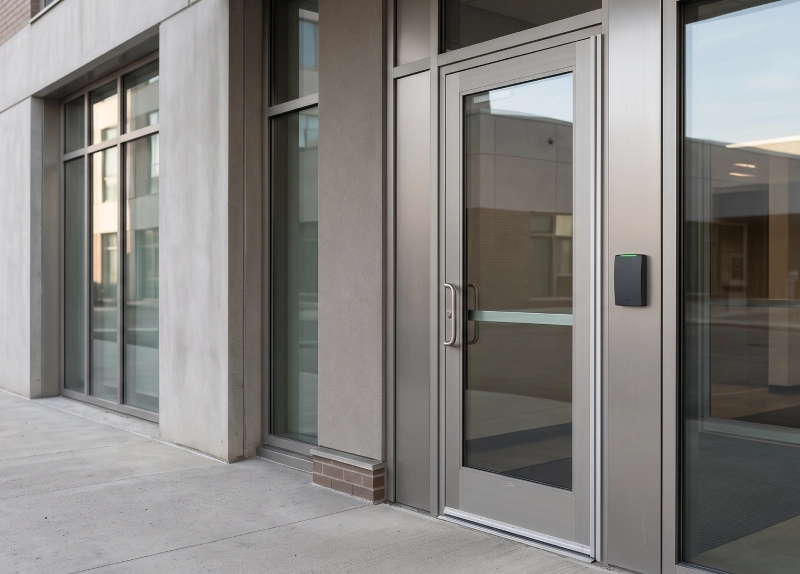
Grant staff, residents, and visitors secure entry to doors and communal areas, with permissions set by role, unit, or schedule.
TURNSTILES & SPEED GATES
Fast, contactless throughput at busy entrances where many people pass in a short space of time.
ELEVATOR & FLOOR ACCESS
Restrict lifts to authorised floors, so credentials control vertical movement as well as doors.
VEHICLE & BARRIER ACCESS
Long-range UHF reads open barriers and car park gates automatically, without the driver needing to stop.
CABINET, LOCKER & ASSET ACCESS
Secure cabinets, lockers, and high-value stores, with a record of who opened what and when.
TIME & ATTENDANCE
The credential that opens a door can also clock staff in and out, feeding hours straight into payroll and rostering.
MULTI-SITE & ZONED ACCESS
One credential works across many buildings and zones, with central control of who reaches which area.
MACHINE & EQUIPMENT AUTHORISATION
Restrict machinery, tools, and consumables to trained, authorised operators, tying access to a verified identity.
VISITOR & CONTRACTOR ACCESS
Issue time-limited credentials that expire automatically, removing the risk of unreturned keys or fobs.
How RFID Access Control Works
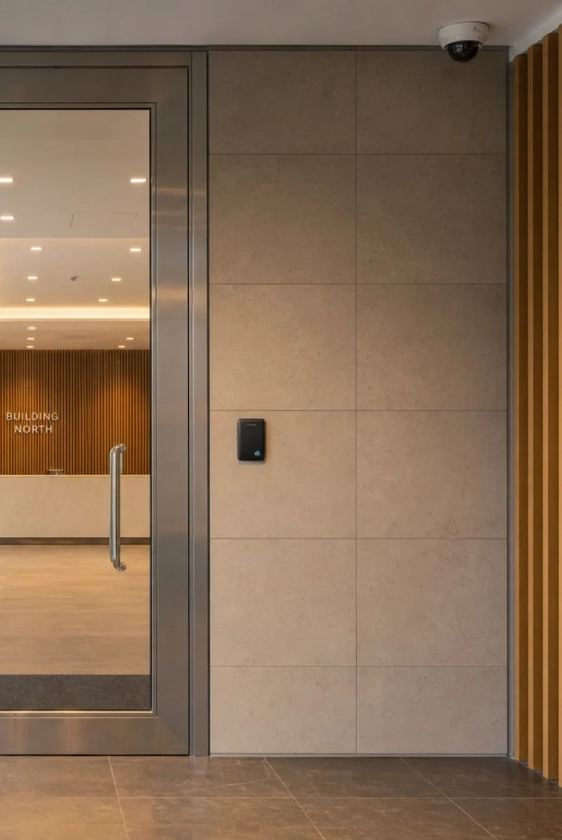
An access control system has four parts: the credential, the reader, the controller, and the lock or gate. Here is how they work together on a single entry.
1
A card, fob, wristband, or mobile device holds a unique, ideally encrypted, identifier.
2
Held near the reader, the credential is powered by the reader’s field and returns its ID, with no contact or line of sight needed.
3
The reader sends the ID to the access controller over a standard interface such as RS485, SPI, or USB.
4
It checks the ID against your access database and grants or denies entry based on permissions, time, and location.
5
An authorised read releases the lock or gate, and the event is recorded for a full audit trail.
Benefits of RFID Access Control
Why RFID has become the standard technology for securing doors, gates, and restricted areas.
✔
No physical keys to cut, lose, or copy. Credentials are read in an instant.
✔
Lost or expired credentials are disabled centrally, with no need to change locks.
✔
Every entry is time-stamped, so you always know who accessed which area and when.
✔
Modern encrypted smart cards are far harder to copy than legacy 125 kHz cards.
✔
IP-rated, on-metal, and temperature-tolerant options suit gates, car parks, and industrial doors.
✔
The same technology covers a single entrance or a large multi-site estate.
✔
Readers connect to CCTV, intruder alarms, time-and-attendance, and building management.
✔
Cards, fobs, wristbands, and mobile credentials to suit the user and the environment.
Proven in Access Control
Two examples of Eccel solving the hardest problem in access control, stopping cloned credentials, with our own encryption and cloud verification.
WATER DISTRIBUTION, ANTI-CLONING
Cloud-verified readers that stop card cloning
A Middle East water network was losing revenue to cloned MIFARE Classic cards that unlocked free water. Replacing every user card was not viable, so Eccel built a new reader with a GSM module that checks each card’s stored credit against a central cloud database. Cloned cards fail the second check, are blacklisted automatically, and the misuse is traced. The solution deployed across Kuwait without replacing the existing dispensing equipment.
HOUSING, DOOR ENTRY
Encrypted key fobs for shared housing
For UK apartments, social housing, and short-let properties, Eccel designed and manufactured an encrypted key fob and door entry reader using its own anti-cloning protocols with 128-bit encryption. The system links to a managed cloud database for real-time oversight, deactivates lost fobs instantly, and is available in a vandal-resistant housing. Built on Pepper C1 technology, custom versions add Wi-Fi, Bluetooth, and NFC for smartphone and cloud access.
RFID Products for Access Control
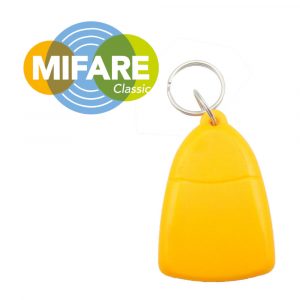
A selection of products suited to secure access. We can also pre-encode tags and design custom credentials and antennas for your application.
Why Choose Eccel
We supply the embedded RFID engine behind access control products, not a finished door system. That makes us the partner of choice for OEMs and integrators.
Pre-certified reader modules
Our embedded modules arrive approved for FCC, CE, and ISED, so you reach market faster without running certification yourself.
Full frequency range and secure credentials
LF (125 kHz), HF and NFC (13.56 MHz), and UHF, with encrypted credentials such as MIFARE DESFire and our own anti-cloning protocols for clone resistance.
Easy integration
Modules with RS485, SPI, I2C, USB, UART, Wi-Fi, Ethernet, WPAN and BLE interfaces, plus free software libraries, connect cleanly to your controller.
In-house design and manufacturing
A UK company that designs its own antennas and produces tags in our own European facilities, with custom encoding and enclosures on request.
Older 125 kHz cards send an unencrypted serial number and can be cloned with cheap hardware. Encrypted credentials such as MIFARE DESFire use mutual authentication, which makes copying them far harder. For any security-critical site we recommend encrypted credentials.
NFC is a subset of HF RFID at 13.56 MHz that adds two-way communication at very short range. It is what allows a smartphone to act as a credential. Many access systems use HF RFID cards and NFC mobile credentials side by side.
LF (125 kHz) suits simple tap-to-enter fobs but is easier to clone. HF and NFC (13.56 MHz) is the modern standard for secure cards and mobile access. UHF suits long-range and vehicle access. We supply all three and help you choose the right one.
Yes. Our embedded modules are certified for FCC, CE, and ISED, so you can build them into a product and go to market without running the approvals yourself.
Yes. Our modules offer RS485, SPI, I2C, USB, UART, Wi-Fi, Ethernet, WPAN and BLE interfaces, with free software libraries, so an integrator can connect them to a controller or host system quickly.
We supply NFC credentials that work with smartphone-based access, and as a manufacturer we can pre-encode tags and design custom credentials and antennas for your application.
Building an access control product, or specifying credentials?
Talk to our engineers about pre-certified reader modules, custom antennas, and secure credentials for your access control application.
