

Product & Component Authentication
Counterfeit goods, fake spare parts, refilled packaging, and unauthorised consumables all rely on one thing: no reliable way to prove what is genuine. A printed label or a hologram can be copied, and a plain barcode or QR code can be photographed and reprinted. Once a fake looks right, it passes as real, and the brand, the customer, and the manufacturer all pay for it.
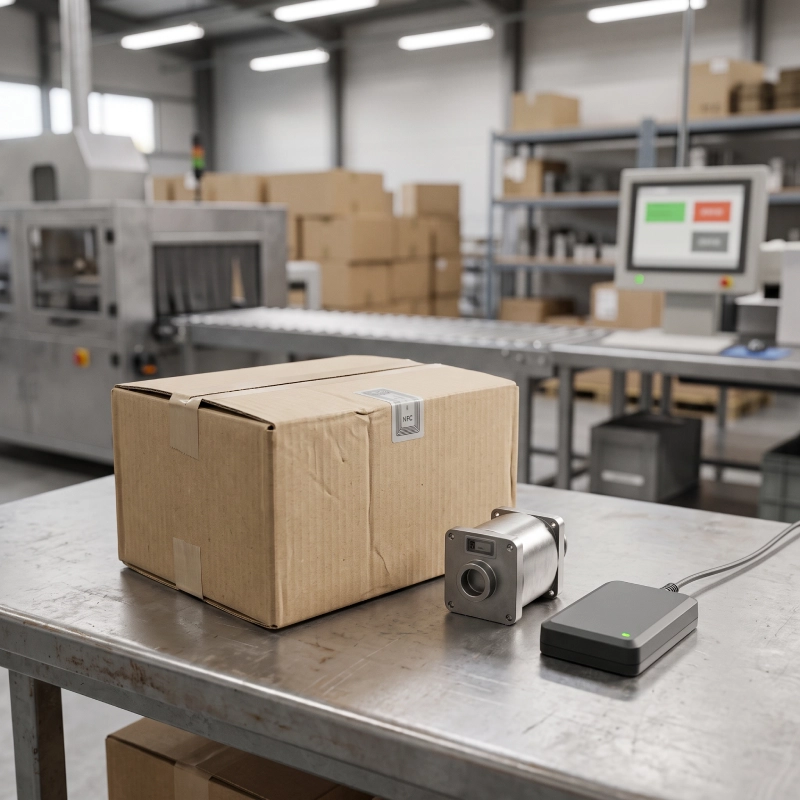
Eccel gives each product or part a cryptographic identity that cannot be copied. A secure NFC tag generates a fresh, single-use code every time it is read, so a captured read cannot be replayed onto a fake. Anyone can check a product with a tap of a smartphone, and systems can verify it at any point along the chain. Tamper-evident options reveal if a seal has been opened, and each check can be logged for full traceability. We supply the secure tags, the reader modules, and the design support to build authentication into a product or a machine.
This is the same anti-cloning engineering that protects our access work. See the shared core on our anti-cloning and encrypted credentials page.
The Problem With Proving Authenticity
Counterfeiting and diversion are expensive and hard to police, because the usual markings offer no real proof. These are the gaps a secure identity has to close.
Labels and codes are copyable
Holograms, printed marks, barcodes, and QR codes can all be reproduced or photographed and reprinted, so they prove nothing on their own.
Fake parts and consumables slip in
Counterfeit or unauthorised components reach assembly lines and machines, hurting quality, safety, and revenue, with no check at the point of use.
No proof for the end customer
A buyer has no simple way to confirm a product is genuine before they trust it, so a convincing fake wins the sale.
Traceability and compliance gaps
Grey-market diversion, recalls, and new rules such as the Digital Product Passport all need a verifiable identity that follows the item through the chain.
What This Gives You
The reasons brands, OEMs and integrators build Eccel’s secure tags and readers into their products.
BRAND PROTECTION & CONSUMER VERIFICATION
A customer taps the product with a phone and instantly sees whether it is genuine, before they buy or use it.
GREY-MARKET & DIVERSION DETECTION
Serialised identities reveal when genuine goods appear outside their authorised region or channel.
COMPONENT AUTHENTICATION AT ASSEMBLY
A reader confirms a part is genuine before it goes into the product, blocking counterfeit or unauthorised components.
CONSUMABLE & CARTRIDGE AUTHENTICATION
A machine reads an embedded tag and accepts only genuine consumables, protecting performance and revenue. For an OEM that turns the consumable into a recurring revenue stream the machine itself enforces.
TAMPER-EVIDENT SEALS
A tamper loop in the seal detects if a product has been opened, and the tag reports that state on the next tap.
SUPPLY-CHAIN TRACK & TRACE
Each item is verified and logged as it moves, giving full chain-of-custody visibility from factory to customer.
DIGITAL PRODUCT PASSPORT
The tag carries or links to a product’s digital identity, supporting EU Digital Product Passport and sustainability reporting.
WARRANTY, ENGAGEMENT & RE-ORDER
A genuine tap can register a warranty, unlock content, or trigger a re-order, turning authentication into a customer touchpoint.
RECALL & LIFECYCLE TRACEABILITY
A verifiable history per item makes targeted recalls, warranty checks, and end-of-life handling accurate rather than blanket.
How Product Authentication Works
A secure identity, a check that cannot be faked, and a record of every read. Here is how a single verification flows.
1
Each item gets a secure identity
A cryptographic NFC tag such as NTAG 424 DNA is embedded into the product or consumable, holding a secret key that never leaves the chip.
2
A tap or read requests proof
An NFC smartphone or a reader powers the tag, which generates a fresh, single-use cryptographic message every time, so a captured read cannot be replayed onto a fake.
3
The code is verified
The unique message is checked against a server or cloud database, which confirms in an instant whether the item is genuine.
4
Tamper and status are revealed
A tamper loop in a seal or label records if the product has been opened, and the tag reports that state on the next read.
5
Every check builds a record
Each verification is logged with time and place, creating a chain-of-custody trail for recalls, audits, and Digital Product Passport requirements.
Authentication Methods Compared
Every method claims to prove a product is genuine. The difference is whether the proof survives someone deliberately trying to fake it.
Method
Copy Resistance
Customer can verify
Tamper-evidence
Chain traceability
Printed label or hologram
Low
By eye only, no proof
No
No
Barcode or QR code
Low
Yes, but the code is static and copyable
No
Limited
Basic NFC (UID only)
Low to medium
Yes, by tap
No
Limited
Cryptographic NFC (SUN)
High
Yes, by tap, no app on most phones
Optional
Yes, serialised
Eccel crypto NFC, tamper & cloud
Highest
Yes, by tap
Yes
Full chain of custody
No technology can promise absolute security, but encrypted, mutually authenticated tags cannot be copied with the consumer tools used to clone simple tags.
Why Choose Eccel
We supply the embedded RFID engine behind product authentication, not a finished tracking platform. That makes us the partner for brands, OEMs, and integrators building it into their products.
Secure, verifiable tags
Cryptographic NFC tags such as NTAG 424 DNA and MIFARE DESFire, plus our own anti-cloning credentials, with tamper-evident options.
Authentication built into the product
We embed reader modules and NFC into products and machines, so a device can verify its own parts and consumables at the point of use, connecting to your controller over RS232, RS485, Ethernet, USB or UART.
Custom tags and antennas
Bespoke on-metal, miniature, or embedded tags and antennas designed to fit the product, with pre-encoding to your scheme.
Verification and cloud
Reader modules and cloud verification, the same engineering that catches cloned cards in our access projects, applied to goods.
Proven Cryptographic Identity
Two projects where Eccel solved the exact problem this page describes, using our own encryption and verified consumables.
OWN ANTI-CLONING PROTOCOLS
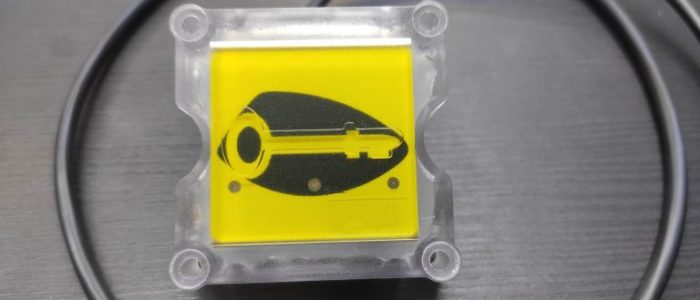
Encrypted credentials with 128-bit protection
For shared housing, Eccel designed and manufactured encrypted credentials and readers using its own anti-cloning protocols with 128-bit encryption, linked to a managed cloud database. The same cryptographic identity and mutual authentication underpin a product that has to prove it is genuine.

CLOUD VERIFICATION
Cloud-verified readers that catch duplicates
For a water network losing revenue to cloned cards, Eccel built a reader with a GSM module that checks each credential against a central cloud database. Duplicates fail the check, are blacklisted automatically, and the misuse is traced. It is the same verification model that confirms a genuine product and flags a fake.
Where Product Authentication Matters
A verifiable identity protects goods, parts, and consumables across these sectors. These are where we apply it.
Frequently Asked Questions
Common questions about authenticating products, parts, and consumables.
In most cases yes. A cryptographic NFC tag generates a unique web link on each tap, which opens in the phone’s browser to show the result. Modern phones read NFC natively, so no dedicated app is needed for a simple genuine or fake check.
A QR code or hologram is static, so anything printed can be photographed and reproduced. A cryptographic NFC tag produces a fresh, single-use code on every read using a key that never leaves the chip, so a captured read cannot be replayed and a copied tag fails verification.
Yes. Tamper-evident tags include a detection loop built into the seal. If the seal is broken, the tag records it permanently and reports the opened state on the next tap, so refilled or interfered-with products are caught.
Yes. We embed a reader module into the product or machine so it authenticates a tag in the cartridge, part, or consumable at the point of use, and accepts only genuine items. This protects performance, safety, and revenue.
Yes. A secure NFC tag can carry or link to a product’s digital identity and its record of checks, which supports the traceability and data-carrier requirements of the EU Digital Product Passport and similar schemes.
We supply the secure tags and reader modules, pre-encode tags to your scheme, and design custom credentials and antennas. We provide the embedded engine and the design support, and work with your systems for the verification back end.
Protecting a product, a part, or a consumable from counterfeits?
Talk to our engineers about cryptographic NFC tags, tamper-evident options, and reader modules for your product authentication.
